
Course Overview
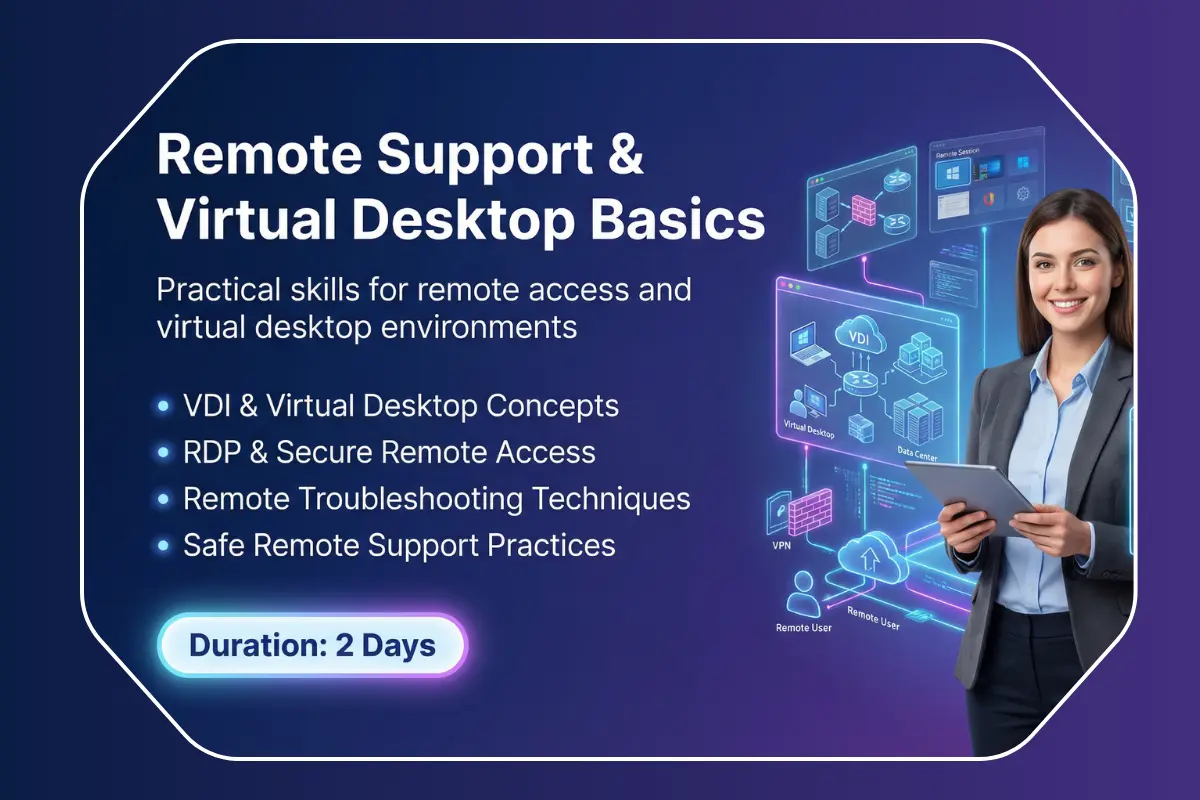
Remote work and distributed teams have made remote support an essential capability for IT service desks and support engineers. Modern organisations rely on secure remote access tools and virtual desktop technologies to help users quickly and safely resolve issues without being physically present. This programme introduces the key tools and concepts used in remote support environments.
Through mentor-led sessions and practical scenarios, learners explore technologies such as Remote Desktop Protocol (RDP), virtual desktop infrastructure (VDI), and secure remote support tools. The programme explains how remote connections are established, how access is controlled, and how IT professionals can safely troubleshoot systems from a distance.
Participants also learn structured troubleshooting workflows for common remote support issues such as connectivity failures, authentication problems, and virtual desktop performance concerns. By the end of the course, learners will be able to confidently provide remote support while maintaining security and professionalism in modern workplace environments.
Hands-On Learning
Practical labs using remote desktop tools and virtual desktop environments to simulate real support scenarios.
Mentor-Led Sessions
Experienced mentors guide learners through real-world remote support cases and best practices for assisting users securely.
Career-Ready Skills
Remote support capabilities used by service desks, helpdesks, and endpoint support teams.
Learning Outcomes
Analyse remote support technologies and workflows
Implement secure remote assistance practices
Evaluate virtual desktop infrastructure concepts
Diagnose common remote access problems
Communicate effectively with remote users
Design structured troubleshooting workflows for remote environments
Prerequisites
Basic understanding of computer operating systems.
Familiarity with IT support or helpdesk environments.
Basic networking awareness.
Detailed Syllabus
Step-by-step learning journey from basics to professional practice
Topics Covered
- Introduction to remote support environments
- Understanding modern distributed workplaces
- Lab environment setup and tool overview
Skills You'll Gain
Master these in-demand skills through hands-on practice
Career Progression
A clear view of the roles this programme supports, what typically comes next, and where learners progress over time
Ways to Learn
Choose the learning format that works best for you and your team
Live Online
Instructor-Led Training
Join live instructor-led sessions from anywhere. Interactive, engaging, and flexible.
- Live instructor interaction (real-time)
- Trainer-led walkthroughs and real examples
- Guided resources and session notes provided
- Structured Q&A and practical discussion
Price per person
Group enrolments and early planning options available.
All prices are exclusive of VAT where applicable. Group enrolments and custom packages available on request.
Prefer a Faster, Personalised Route into IT?
Not everyone learns best in a group. If you want focused guidance, faster clarity, and confidence you can use on the job, our 1-to-1 Fast-Track Training gives you private, mentor-led support tailored to your experience and goals.
"Many learners choose 1-to-1 when they want understanding, not memorisation."
Exam & Certification Information
Everything you need to know about the certification exams
Important Information
You will receive an Xcademia certificate of completion based on participation and successful completion of labs and scenario simulations.
Credential
Certificate of Completion
On successful completion of Remote Support & Virtual Desktop Basics, learners receive an Xcademia Certificate of Completion. This standalone certificate is issued directly by Xcademia and is aligned with globally recognised frameworks and best practices.
Frequently Asked Questions
Everything you need to know about this course
Yes. The programme is designed for learners starting in IT support roles that require remote assistance skills.
Ready to Start Your Learning Journey?
Take the next step in your professional development